

Quick Answer: What Does “Stay Tuned” Mean?
Stay tuned means “keep watching or listening,” “keep paying attention,” or “wait for more information.” It tells someone that something else is expected to happen or be announced soon.
For example:
“We have an exciting announcement coming tomorrow. Stay tuned!”
Here, the speaker is asking people to continue paying attention because more information will be provided later.
In modern communication, “stay tuned” does not necessarily mean physically watching or listening to a broadcast. It can simply mean keep checking for updates or wait for what comes next.
Table of Contents
- What Does “Stay Tuned” Mean?
- Stay Tuned Meaning in Simple English
- Stay Tuned Definition
- What Does Stay Tuned Mean in Text?
- What Does Stay Tuned Mean in Chat?
- Stay Tuned Meaning in Conversation
- Stay Tuned Meaning on Social Media
- What Does “Please Stay Tuned” Mean?
- What Does “Stay Tuned for More” Mean?
- What Does “Stay Tuned for Updates” Mean?
- What Does “I’ll Stay Tuned” Mean?
- What Does “Stay Tuned” Mean From a Guy or Girl?
- How Is “Stay Tuned” Used?
- When Should You Say “Stay Tuned”?
- Stay Tuned in a Sentence
- 25+ Stay Tuned Examples
- Stay Tuned Examples in Text Messages
- Stay Tuned Examples in Everyday Conversation
- Stay Tuned Examples for Social Media
- Stay Tuned Examples for Work and Business
- Using Stay Tuned in Emails
- Stay Tuned in Marketing and Advertising
- Stay Tuned for News and Announcements
- Stay Tuned for Upcoming Events
- Stay Tuned for New Content
- Is “Stay Tuned” Formal or Informal?
- Is “Stay Tuned” Professional?
- Is “Stay Tuned” Polite?
- Is “Stay Tuned” Correct English?
- Is “Stay Tuned” an Idiom?
- What Does “Tuned” Mean in “Stay Tuned”?
- Literal vs. Figurative Meaning
- Where Did “Stay Tuned” Come From?
- Stay Tuned in Radio and Television
- Stay Tuned in Internet Culture
- Stay Tuned Synonyms
- Professional Alternatives
- Casual Alternatives
- Stay Tuned vs. Similar Expressions
- How to Reply to “Stay Tuned”
- Common Mistakes
- When Not to Use “Stay Tuned”
- Frequently Asked Questions
- Conclusion
Key Takeaways
- Stay tuned means to continue paying attention or wait for more information.
- It can mean “keep watching,” “keep listening,” or “keep checking for updates.”
- The phrase originated from broadcasting language involving radio and television.
- Today, it is widely used online, especially on social media and digital platforms.
- It can be casual, professional, promotional, or conversational depending on context.
- “Stay tuned” often creates anticipation about something that will happen or be revealed later.
- Similar expressions include “stay updated,” “keep posted,” “watch this space,” and “more to come.”
What Does “Stay Tuned” Mean?

The phrase “stay tuned” means to continue paying attention because more information, entertainment, news, or another development is coming.
It is often used when the speaker does not want the listener or reader to stop paying attention. Instead, they want that person to remain interested until the next update or event.
For example:
“Stay tuned for the results.”
This means that the results are not available yet, but they are expected later. The listener is being encouraged to remain attentive until the results are announced.
The expression can also be used to create excitement. A business might announce that a new product is coming and say “stay tuned” to encourage customers to watch for the official announcement.
Stay Tuned Meaning in Simple English
In very simple English, stay tuned means “keep waiting and paying attention.”
Depending on the situation, it can also mean:
- Keep watching.
- Keep listening.
- Keep checking.
- Wait for more information.
- Do not miss the next update.
- More information is coming.
- Something interesting will happen soon.
For example, if someone says, “Stay tuned for tomorrow’s announcement,” they mean that you should check back tomorrow because an announcement will be made.
The expression is therefore closely connected with the idea of continuing attention.
Stay Tuned Definition

A general definition of stay tuned is to continue listening, watching, or paying attention because something else is expected to follow.
The expression is especially useful when information is being released gradually. Instead of giving everything at once, the speaker tells the audience that another part, update, announcement, or development will come later.
For example:
“Stay tuned for the full story.”
This means the full story has not yet been presented and the audience should continue paying attention for additional information.
What Does Stay Tuned Mean in Text?
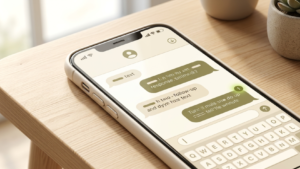
When someone says “stay tuned” in a text message, they usually mean that you should wait for more information or an upcoming message.
Unlike its original broadcasting use, “stay tuned” in texting does not usually require you to keep a television or radio on. It is commonly used figuratively.
For example:
“I have some big news to tell you. Stay tuned!”
The sender means that they have more information but are not revealing everything yet.
Another example is:
“I’ll send you the details later. Stay tuned.”
Here, “stay tuned” means to wait for the details and remain attentive to the next message.
What Does Stay Tuned Mean in Chat?
In online chat, stay tuned generally means “wait for what comes next” or “keep checking for an update.”
The phrase can be playful, mysterious, exciting, or practical.
For example, a friend might say:
“I have a surprise planned for you. Stay tuned.”
In this context, the person is deliberately creating suspense.
In a group chat, someone could say:
“We are still waiting for confirmation. Stay tuned.”
Here, the meaning is more practical: everyone should wait for additional information.
Stay Tuned Meaning in Conversation
In everyday conversation, “stay tuned” can mean keep paying attention because something will be revealed, explained, or announced later.
It can also be used humorously.
For example:
“I’m not telling you yet. Stay tuned.”
This suggests that the speaker intends to reveal the information later.
The phrase does not necessarily mean that the information will arrive immediately. The timing depends on the context.
What Does “Please Stay Tuned” Mean?
“Please stay tuned” is a polite version of “stay tuned.” It asks the audience to continue paying attention or wait for additional information.
For example:
“Please stay tuned for further updates.”
This means that more updates are expected and the audience should continue checking for them.
The word “please” makes the request sound slightly more courteous, although “stay tuned” by itself is already a normal expression.
What Does “Stay Tuned for More” Mean?
“Stay tuned for more” means that additional information, content, news, or developments are coming.
It is particularly common in advertising, entertainment, social media, and promotional communication.
For example:
“We have several new products launching soon. Stay tuned for more!”
The speaker is telling the audience that this is not the final announcement and additional information will follow.
What Does “Stay Tuned for Updates” Mean?
“Stay tuned for updates” means to continue checking for new information about a particular situation.
This wording is common when something is developing and the final information is not available yet.
For example:
“The event schedule is being finalized. Stay tuned for updates.”
This tells people that the schedule may change or additional details will be announced later.
What Does “I’ll Stay Tuned” Mean?
“I’ll stay tuned” means “I will keep paying attention,” “I will wait for the update,” or “I will watch for more information.”
For example:
“We will announce the winner tomorrow.”
“Okay, I’ll stay tuned.”
The response shows that the listener understands that more information will be available later.
What Does “Stay Tuned” Mean From a Guy or Girl?
When a guy or girl says “stay tuned,” the meaning depends on the conversation rather than the person’s gender.
It might mean:
- Wait for an upcoming message.
- Wait for an announcement.
- Expect a surprise.
- More information will be shared later.
- The person is teasing something they have not revealed yet.
For example, if someone says, “I have a surprise for you—stay tuned,” the phrase creates anticipation.
It does not automatically have a romantic meaning. The surrounding conversation is important.
How Is “Stay Tuned” Used?
“Stay tuned” can be used in several different situations.
| Situation | Possible Meaning |
|---|---|
| Television | Keep watching |
| Radio | Keep listening |
| Texting | Wait for more information |
| Social media | Watch for an update |
| Business | Expect an announcement |
| Marketing | More promotional information is coming |
| Conversation | Wait and see what happens next |
When Should You Say “Stay Tuned”?
You can say “stay tuned” when you know that more information or content will follow and you want people to remain interested.
It works particularly well when:
- You are announcing something later.
- You are preparing a surprise.
- You are waiting for confirmation.
- You are releasing information in stages.
- You are promoting upcoming content.
- You want an audience to watch for an update.
However, it is better to avoid the phrase when there is no genuine future update. Saying “stay tuned” without providing meaningful follow-up information can make communication feel vague.
Stay Tuned in a Sentence
Here are several natural ways to use the expression:
- “Stay tuned for the latest news.”
- “Stay tuned for tomorrow’s announcement.”
- “Stay tuned—we have something special coming.”
- “Please stay tuned for further information.”
- “Stay tuned to find out what happens next.”
- “I’ll stay tuned for the results.”
- “Stay tuned for the final update.”
- “Stay tuned because more details are coming soon.”
25+ Stay Tuned Examples
- Stay tuned for the latest news.
- Stay tuned for tomorrow’s announcement.
- Stay tuned for more information.
- Stay tuned for the big reveal.
- Stay tuned for our next update.
- Stay tuned to find out who wins.
- Stay tuned for the final results.
- Please stay tuned for further details.
- Stay tuned because something exciting is coming.
- Stay tuned for the next episode.
- Stay tuned for exclusive content.
- Stay tuned for our special announcement.
- Stay tuned—we will share the details soon.
- Stay tuned for the complete story.
- Stay tuned for more updates.
- Stay tuned to our social media pages.
- Stay tuned for the event schedule.
- Stay tuned to learn more.
- Stay tuned for the product launch.
- Stay tuned for breaking news.
- Stay tuned for the next part.
- Stay tuned because we are not finished yet.
- Stay tuned for a surprise.
- Stay tuned for important information.
- Stay tuned for what comes next.
- Stay tuned for more exciting news.
- Stay tuned and keep checking for updates.
Stay Tuned Examples in Text Messages
In texting, the expression can sound natural and conversational.
- “I have news for you. Stay tuned!”
- “I’ll tell you everything later. Stay tuned.”
- “The results aren’t out yet. Stay tuned.”
- “Something exciting is coming. Stay tuned!”
- “Wait until tomorrow. Stay tuned.”
- “I have a surprise planned. Stay tuned.”
- “I’m waiting for confirmation. Stay tuned for an update.”
In these examples, the phrase generally means to wait for the next piece of information.
Stay Tuned Examples in Everyday Conversation
The phrase can also appear naturally in spoken conversations.
Example 1:
“Are you going to tell me what happened?”
“Not yet. Stay tuned.”
Example 2:
“When will you announce the results?”
“Tomorrow. Stay tuned.”
Example 3:
“Do you know what the surprise is?”
“I do, but I can’t tell you yet. Stay tuned.”
These examples show how the phrase can create anticipation or simply ask someone to wait.
Stay Tuned Examples for Work and Business
“Stay tuned” can be used in professional communication, especially when employees, customers, or partners are waiting for information.
- “Stay tuned for the updated schedule.”
- “Stay tuned for additional information from our team.”
- “Stay tuned for details about the new policy.”
- “Stay tuned for the official announcement.”
- “Please stay tuned while we finalize the details.”
In formal business writing, however, alternatives such as “please watch for further updates” or “we will provide additional information shortly” may sound more precise.
Using Stay Tuned in Emails
The expression can be used in emails, but its suitability depends on the audience and purpose.
For a friendly company newsletter, “stay tuned” can sound engaging:
“We are preparing several exciting updates for next month. Stay tuned for more details.”
For a highly formal business email, a more direct sentence may be preferable:
“We will provide additional information once the details have been finalized.”
Therefore, “stay tuned” is not incorrect in professional communication, but the surrounding tone should determine whether it is the best choice.
Stay Tuned in Marketing and Advertising
Marketing campaigns frequently use “stay tuned” because it creates anticipation.
A brand might announce:
“Our biggest sale of the year is coming soon. Stay tuned.”
The phrase encourages customers to pay attention to future announcements.
It can also be used during product launches, contests, seasonal campaigns, special offers, and new content releases.
From a communication perspective, the phrase works because it gives the audience a reason to expect something in the future.
Stay Tuned for News and Announcements
News organizations, websites, companies, and individuals may use “stay tuned” when information is still developing.
For example:
“We are waiting for the official statement. Stay tuned for updates.”
This tells the audience that the current information may not be complete and that additional details are expected.
In this context, “stay tuned” is similar to saying “keep checking for the latest information.”
Stay Tuned for Upcoming Events
Event organizers may use “stay tuned” before releasing information about dates, speakers, schedules, tickets, locations, or special announcements.
Examples include:
- “Stay tuned for the event schedule.”
- “Stay tuned for ticket information.”
- “Stay tuned for the speaker announcement.”
- “Stay tuned for more details about the conference.”
Stay Tuned for New Content
Content creators often use the phrase when they are preparing upcoming videos, articles, podcasts, photographs, or other material.
For example:
“A new video is coming this weekend. Stay tuned!”
The meaning is simple: keep watching the creator’s content because something new will be published.
Is “Stay Tuned” Formal or Informal?
“Stay tuned” can be either informal or moderately professional depending on how it is used.
It is extremely common in casual communication, advertising, broadcasting, social media, and public announcements.
It can also appear in business communication, particularly when the tone is friendly or audience-focused.
However, highly formal documents may use more specific wording.
| Context | Suitability |
|---|---|
| Text message | Very natural |
| Social media | Very natural |
| Television | Very natural |
| Marketing | Very natural |
| Friendly business email | Usually acceptable |
| Legal document | Usually too conversational |
| Academic paper | Usually unnecessary |
Is “Stay Tuned” Professional?
Yes, “stay tuned” can be professional when used in the right context.
For example:
“Stay tuned for further updates regarding the project.”
This can work in a professional announcement.
However, professionalism also depends on clarity. If the audience needs a precise date, deadline, or action, it is usually better to provide that information directly.
For example, instead of only saying:
“Stay tuned.”
A company could say:
“We will publish the updated schedule on Monday. Please check back for details.”
The second version gives the reader more useful information.
Is “Stay Tuned” Polite?
Yes. “Stay tuned” is generally a polite and neutral expression.
Adding “please” can make the request sound more courteous:
“Please stay tuned for further information.”
However, tone matters. If someone repeatedly tells another person to “stay tuned” without providing any useful update, the phrase could eventually sound vague or frustrating.
Is “Stay Tuned” Correct English?
Yes. “Stay tuned” is a standard English expression.
It is grammatically established and widely understood by English speakers.
The phrase is commonly followed by information describing what the audience should wait for.
Examples:
- Stay tuned for more information.
- Stay tuned for updates.
- Stay tuned for the results.
- Stay tuned to find out what happens next.
Is “Stay Tuned” an Idiom?
“Stay tuned” is commonly treated as an idiomatic expression because its modern meaning is not limited to physically adjusting a radio or television frequency.
When someone says “stay tuned,” they are usually not asking you to tune an actual device. Instead, they are asking you to continue paying attention.
The expression therefore has a figurative use that has become very common in modern English.
What Does “Tuned” Mean in “Stay Tuned”?
The word “tuned” is connected to the idea of adjusting a radio or television receiver to the correct frequency or channel.
In the original broadcasting context, staying tuned meant keeping the receiver on the appropriate station or channel.
Over time, the phrase developed a broader figurative meaning. Today, being “tuned in” can mean being attentive, aware, or interested in something.
That development explains why “stay tuned” can now be used even when there is no radio or television involved.
Literal vs. Figurative Meaning of Stay Tuned
| Type | Meaning | Example |
|---|---|---|
| Literal broadcasting meaning | Keep the receiver on the selected station or channel | “Stay tuned to this station.” |
| Figurative modern meaning | Continue paying attention or wait for an update | “Stay tuned for tomorrow’s news.” |
The figurative meaning is now much more common in everyday digital communication.
Where Did the Phrase “Stay Tuned” Come From?
The expression is closely associated with the development of radio and television broadcasting.
Early broadcast audiences needed to keep their receivers adjusted to the correct frequency or channel. A broadcaster could tell listeners to remain on the station because another segment, program, announcement, or piece of information was coming next.
From this broadcasting context, “stay tuned” developed into a general expression for remaining attentive.
As broadcasting became part of everyday life, the phrase became widely recognized and eventually moved beyond radio and television.
Stay Tuned in Radio and Television
Radio and television played a major role in popularizing “stay tuned.”
A presenter might say:
“Stay tuned after the break for more.”
The audience understood that the program would continue after a short interruption.
Television presenters also used the phrase before upcoming segments, interviews, news updates, advertisements, and special announcements.
Today, people continue to use the expression even though communication has expanded far beyond traditional broadcasting.
How “Stay Tuned” Became Popular in Internet Culture
The internet gave the phrase a much broader range of uses.
Websites, social networks, video platforms, newsletters, podcasts, and messaging apps all allow creators to communicate directly with audiences. As a result, “stay tuned” can now refer to almost any type of upcoming digital information.
For example, a creator may say:
“Stay tuned for the next video.”
A website may say:
“Stay tuned for our upcoming announcement.”
A person may write:
“Stay tuned—I’ll explain everything later.”
Although the medium has changed, the central idea remains the same: continue paying attention because something else is coming.
Stay Tuned Synonyms
There are many expressions that can communicate a similar idea.
| Alternative | General Meaning |
|---|---|
| Stay updated | Continue receiving new information |
| Stay informed | Continue learning about developments |
| Keep posted | Continue receiving updates |
| Keep watching | Continue watching |
| Keep listening | Continue listening |
| Watch this space | Look for future information |
| Keep an eye out | Watch for something |
| More to come | Additional information is coming |
| Coming soon | Something will be available shortly |
| Look out for | Pay attention for something expected |
Professional Alternatives to “Stay Tuned”
In formal or professional communication, you may want a more precise expression.
- Please watch for further updates.
- We will provide additional information shortly.
- Please check back for further details.
- Further information will be shared soon.
- We will keep you informed.
- Additional details will follow.
- Please monitor future announcements.
- We will provide an update once the information is confirmed.
The best alternative depends on the purpose and level of formality.
Casual Alternatives to “Stay Tuned”
For friends, chats, and social media, these alternatives may sound natural:
- Keep watching.
- Wait for it.
- More coming soon.
- Keep an eye out.
- Watch this space.
- More to come.
- Just wait and see.
- You’ll find out soon.
- Keep checking.
- Don’t miss the next update.
Stay Tuned vs. Similar Expressions
Stay Tuned vs. Stay Posted
Stay posted usually emphasizes receiving updates or information. “Stay tuned” has a broader meaning and can include watching, listening, waiting, or paying attention.
Stay Tuned vs. Keep Me Posted
Keep me posted normally means “keep me informed.” It is directed toward the person providing information. “Stay tuned” usually tells the audience to remain attentive.
Stay Tuned vs. Watch This Space
Watch this space means to look for something new or important that will appear in a particular place or platform. It has a similar sense of anticipation.
Stay Tuned vs. Keep an Eye Out
Keep an eye out means to watch carefully for something. It often refers to a specific person, object, message, or event.
Stay Tuned vs. More to Come
More to come simply tells the audience that additional information or content will follow. “Stay tuned” adds a request for the audience to continue paying attention.
Stay Tuned vs. Stay Updated
Stay updated focuses on remaining informed about new developments. “Stay tuned” can have the same meaning but also carries a stronger sense of waiting or anticipation.
How to Reply to “Stay Tuned”
If someone tells you to “stay tuned,” your response depends on the situation.
Casual replies include:
- “Sure!”
- “I will!”
- “Sounds good.”
- “I’m waiting!”
- “Can’t wait!”
- “I’ll keep an eye out.”
- “Looking forward to it.”
- “Okay, keep me posted.”
If the person is teasing an announcement, a playful response could be:
“Now you’ve made me curious!”
If it is a professional situation, you could respond:
“Thank you. I’ll watch for the update.”
Common Mistakes When Using “Stay Tuned”
Using It Without a Future Update
“Stay tuned” works best when there is genuinely something more to come.
Using It Too Often
Repeating the phrase frequently can make communication feel vague.
Not Giving Context
Instead of simply saying “stay tuned,” it is often more useful to say what people should expect.
For example:
Less specific: “Stay tuned.”
More specific: “Stay tuned for the official announcement tomorrow.”
Using It in Highly Formal Documents
The phrase is correct English, but some formal documents require more precise wording.
When Not to Use “Stay Tuned”
Although “stay tuned” is versatile, it is not appropriate for every situation.
You may want to avoid it when:
- The reader needs an immediate answer.
- There will be no future update.
- You need to provide a specific deadline.
- The message is highly formal or technical.
- The phrase would make an important instruction unclear.
In these situations, direct language is usually better.
For example, instead of saying:
“Stay tuned for information about your appointment.”
You could say:
“We will email you the appointment details by Friday.”
The second sentence provides a clear expectation.
Frequently Asked Questions About Stay Tuned
What is the simplest meaning of stay tuned?
The simplest meaning is “keep paying attention and wait for more information.”
What does stay tuned mean in texting?
In texting, it usually means “wait for my next message or update” or “keep checking because more information is coming.”
Does stay tuned mean wait?
Yes, it can mean wait, but it usually includes the idea of continuing to pay attention while waiting.
Is stay tuned a positive phrase?
The phrase itself is neutral. It can be used for exciting news, ordinary updates, developing situations, or upcoming information.
Is stay tuned formal English?
It is standard English and can be used professionally, but it is more conversational than highly formal expressions such as “additional information will follow.”
Is stay tuned polite?
Yes. “Stay tuned” is generally polite and neutral. “Please stay tuned” sounds slightly more courteous.
What is another way to say stay tuned?
Depending on the context, you can say “stay updated,” “stay informed,” “keep posted,” “watch this space,” “keep an eye out,” or “more to come.”
What does stay tuned for more mean?
It means that additional information, content, news, or announcements will be provided later.
What does stay tuned for updates mean?
It means to continue checking or paying attention because new information will be shared.
Can I use stay tuned in a text message?
Yes. It is very common in text messages, chats, and social media conversations.
Can I use stay tuned in an email?
Yes. It can work in friendly or moderately professional emails, especially when talking about upcoming information.
Why do people say stay tuned?
People say “stay tuned” when they want others to continue paying attention because something else is expected to happen or be announced.
Where did stay tuned originate?
The expression is strongly associated with radio and television broadcasting, where audiences were encouraged to remain on the same station or channel for what came next.
Does stay tuned mean keep watching?
It can mean “keep watching,” especially in television and video contexts. More generally, it means to continue paying attention.
What does I’ll stay tuned mean?
“I’ll stay tuned” means “I will continue paying attention” or “I will wait for the next update.”
What does please stay tuned mean?
“Please stay tuned” politely asks someone to continue watching, listening, or checking for additional information.
Is stay tuned an idiom?
It is commonly used as an idiomatic expression because its modern meaning extends beyond the literal idea of tuning a broadcast receiver.
Can stay tuned be used on social media?
Yes. It is extremely common on social media for announcements, new content, product launches, events, and updates.
What is the opposite of stay tuned?
There is no single exact opposite in every context. Depending on the situation, ideas such as “ignore the update,” “stop watching,” or “you no longer need to wait” may express the opposite idea.
Does stay tuned mean something is coming soon?
Usually, it suggests that more information or content is expected, but the exact timing depends on the context. “Soon” should not be assumed unless the speaker indicates it.
Conclusion
Stay tuned is a versatile English expression that tells someone to continue paying attention because more information, news, content, or another development is coming.
Its original connection with radio and television helps explain the phrase, but its modern use has expanded significantly. Today, people use “stay tuned” in text messages, online chats, social media posts, emails, marketing campaigns, business announcements, television programs, podcasts, and everyday conversations.
The phrase can mean “keep watching,” “keep listening,” “keep checking,” “wait for more,” or simply “pay attention to what comes next.”
Its meaning becomes clearer when you look at the context. A friend may use it to create suspense, a broadcaster may use it before the next segment, and a company may use it before releasing an announcement.
Whether you are learning English, interpreting a text message, writing a social media caption, or preparing professional communication, understanding “stay tuned” can help you recognize how this common expression works in modern English.
In short, when someone says “stay tuned,” they are telling you that the story, announcement, conversation, or information is not finished yet—so keep paying attention for what comes next.
Yes, use this exact URL for the ICL internal link:
Internal Links
- Readers interested in other internet abbreviations can also explore ICL Meaning to understand how this abbreviation is used in texting and online conversations.
- If you want to learn about another common expression used in text messages, check out GTS Meaning in Text for its definition, examples, and common usage.
- You can also explore DSL Meaning Slang to learn how this abbreviation is used in casual digital communication and online conversations.
- For a reliable dictionary definition of the phrase, readers can refer to Merriam-Webster – Stay Tuned for additional meaning and usage information.
- Another useful reference is Dictionary.com – Stay Tuned, which provides further context about the phrase and how it is used.
- For English learners, Longman Dictionary of Contemporary English – Stay Tuned provides additional information about the expression and its everyday usage.
- If you are looking for alternative ways to express the same idea, Grammar Orbits – Other Ways to Say Stay Tuned offers related expressions and wording options.
- You can also explore The Free Dictionary – Stay Tuned for another reference on the phrase and its idiomatic use.





Stay Tuned Meaning on Social Media
On social media, “stay tuned” is frequently used when a person, creator, organization, or business wants followers to watch for upcoming content.
Common examples include:
Social media has expanded the meaning of “stay tuned.” Instead of referring to a television or radio broadcast, it can now mean following an account, checking notifications, watching stories, or returning to a website.